

OneMonkey.org

LINKS
Home
Services
Ethical Policy
Contact Details
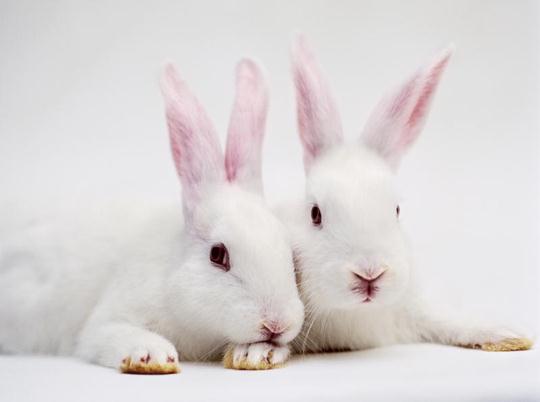
Two lagomorphs waiting for bad things

to happen.

OneMonkey - Products & Services

BioCare Facilities & Services

Transgenic Technology

The OneMonkey Group is a major player in the world of transgenic technology. This is achieved by our commitment to the expanding science by assisting with the development and maintenance of transgenic lines of animal models.

The OneMonkey Group now offers the following services to our scientific colleagues:-

  • Production of embryos.
  • Production of transgenic strains by micromanipulation.
  • Cryopreservation of embryos.
  • Maintenance of breeding nucleus housed in flexible film isolators.
  • Contract breeding of animal models including transgenic strains of rats and mice for the originator's own needs.
  • Provision of transgenic strains to users either under franchise or license from the originator.
  • Rederivation by embryo transfer or caesarian section.
  • Import/Export of Transgenics.
  • Genetic monitoring.

All part of OneMonkey's continuing support programme to the biomedical research world.

 Bioproducts

OneMonkey offers a range of Bioproduct services. All OneMonkey's blood products are collected aseptically from healthy animal models.

Products may be collected and dispatched on the same day for same day/next day delivery.

Whole blood, serum and plasma (commonly used anticoagulants) is available from:

  • Mice
  • Rats
  • Hamsters
  • Gerbils
  • Guinea Pigs
  • Rabbits
  • Ferrets
  • Dogs

Raw, non-sterile unfiltered material is also available from healthy veterinary inspected sheep, pigs and cattle.

Please contact us to discuss your requirements. Bulk and standing orders can be arranged.

Monoclonal Antibody Production

As part of our continuing commitment to Reduction, Refinement and Replacement, OneMonkey are pleased to be associated with the production of monoclonal antibodies using state-of-the-art in-vitro hybridoma cell culture techniques.

We offer a customised monoclonal antibody production service, starting from either pure antigen or from a frozen cell line.

The service includes:

  • Phase 1: Hybridoma formation - following mouse immunisation and including initial screening.
  • Phase 2: Pilot study - including expansion of positive colonies, cloning validation, selection and storage.
  • Phase 3: Large scale production - using bioreactor technology and including purification of antibody and storage.

SCOPE

OneMonkey has ultra modern state of the art laboratories with purpose designed, up-to-date animal houses and sophisticated equipments. A team of technical and scientific experts conduct the studies and prepare documents as per domestic and/ or any international regulatory requirements. Work quality standards are maintained in compliance with GLP.

OneMonkey offers a full contract toxicology services acceptable to UK, Indian, European, US and Japanese Regulatory Authorities. It is capable of dealing with a wide variety of test materials, ranging from food additives to agriculture chemicals and pharmaceuticals, in testing packages consisting of acute, sub-acute, sub-chronic and chronic toxicity, carcinogenicity, teratogenicty, reproductive toxicity studies. LAL test, pyrogen and abnormal toxicity studies are also undertaken. OneMonkey can assist the clients in regulatory submission by presenting and discussing the data with the appropriate authorities.

In-house and all contract work is performed in compliance with GLP and is monitored by centre's own full-time Quality Assurance Unit.

FUNCTIONAL AREAS

In our Laboratory Animal Facility, there are a number of functional subdivisions which are linked together by operational considerations.

The basic subdivisions are :

  • Animal Breeding Area - (one species per room).
  • Animal Stock Area - (one species per room).
  • Study/ Experimental Animal Area - (one species, one study per room)
  • Quarantine Area - (one room per species)
  • Staff areas -
    Office
    Common Room
    Changing / Shower / Toilet Facilities.
    Storage - Food
  • Bedding
  • Equipment long, medium and short term.

  • Service Areas –
    Sterilizing Services
    Food Preparation
    Packing and Dispatch
    Cage Cleaning and Waste Disposal Systems etc.

  • Laboratory area including special facilities such as:
    Pathology laboratory:
    Clinical Chemistry
    Haematology Analysis
    Tissue Processing for Histopathology
    Post Mortem Room.

  • Corridors – Service and Clean Corridors

  • Technical Installations

  Barriers in Use in - Animal and Toxicological Facilities

  • The building is situated away from potential hazards (wild or other infected animal populations)

  • The building is physically separate from other buildings on same site.

  • The building is designed to encourage a one way flow system to increase, isolation between 'clean' and 'dirty' operation.
  • Organization of flow of work in and out of the building, carried out in such a way as to minimize the introduction of disease into, or cross contamination within the facility.
  • Provision of 'extra' room to allow a routine cycle of room sterilization at periodic intervals ideally at the end of each procedure or study.
  • Provision of rodent barriers at the entry to the building and rodent proofing the whole building.
  • Provision for insect barriers at all entrances/exits to/from the building.
  • Restricted entry of personnel (number of people allowed to enter animal facilities are kept to absolute minimum).
  • Enforcement of staff routines,e.g:
  • change of footwear
  • change of other clothing, including head cover.
  • showering plus complete change of clothing
  • wearing of face-mask and gloves when handling the animal
  • Routine screening of staff to identify those harbouring undesirable organisms.
  • Provision and use of sterilizing equipment(eg:autoclave,ultraviolet lock for exit of items only),for sterilization of bedding, cages, bottles and tubes, equipment, water,etc.
  • Use of disinfectants for surface cleaning.
  • Use of adequate amount of ventilating air, filtered to the appropriate level at supply and/or exhaust points as necessary.
  • Use of air pressure differentials to discourage the ingress/egress of air into/from disease-free/infected animal areas.
  • Routine and effective quarantining of all incoming animals.

FACILITIES

Facilities are divided into three categories :

  • Animal rooms
  • Laboratories
  • Other facilities

Each category is further subdivided as follows :

  Animal Rooms:

    Species: Rodents, Rabbits, Guinea pigs and Hamsters.

    Rodent rooms (13 rooms) - Maximum capacity - 5000 animals.
    Quarantine (2 rooms);
    Breeding (stock) (2 rooms);
    Study experimentation (9 rooms);
    Acute (2 rooms);
    Subacute (2 rooms);
    Chronic (2 rooms);
    Carcinogenicity (2 rooms);
    Spare ( 1 room);
    Rabbits/Guinea pigs/Hamsters - Maximum capacity - 500 to 1000 animals
    Rooms ( 3 rooms);
    Quarantine (1 room);
    Breeding / stock ( 1room);
    Study/Experimentation ( 1 room);

    Ventilation system - animal rooms
    Air condition - Ventilation
    Room Temperature - 20±2oC
    Relative Humidity - 30-70%
    HEPA filter - 0.2 micron (99.9% efficiency)
    20-24 (100% fresh) air changes per hour
    Clean corridor positive pressure
    Animal room, dirty/service corridor negative pressure

Laboratories

  • Necropsy room
  • Pathology - Histopathology
  • Haematology
  • Clinical chemistry
  • Other facilities
  • Conference room
  • Documentation
  • Archive
  • Cleaning and sterilisation
  • Animal feed , bedding stores
  • Shower /changing/rest rooms
  • Incinerator room
  •   Lighting

    12 hour light
    12 hour dark cycle
    Light intencity 50 - 100 foot candle at cage level
    Stand by Generators

      Control

    By Building Management System
    (Computerised recording of environmental conditions)

      EQUIPMENTS

    Laboratory equipments
    Some of the important instruments are:

    1. Computerised blood chemistry analyzer Technicon RA 1000 Biochemistry Autoanalyser
    2. Computerised hematology analyzer (multi-species capability)
      Technicon H1*E Hematology Autoanalyser.
    3. Leica Automatic tissue processor
    4. Leica Automatic paraffin embedder Leica Automatic Motorised microtome
    5. Leica Automatic staining machine
    6. Zeiss Trinocular microscope
    7. Lab India Histoplate
    8. Histobath
    9. Heating Block
    10. Remi Centrifuge
    11. Vortex Mixer
    12. Tomy Microcentrifuge
    13. Double Doored Autoclaves (x2)
    14. Hot Air Oven (x2)
    15. Computers--/Centralised computer system.

      Animal Room equipments:

    -Cages & -Racks
    As per space recommendations for Laboratory animals(as per EEC & USA)

    Space Allotted For Laboratory Animals

      Other Equipments

    1. Autoclave (L) 6ft.X(M)4ft.X(H)6ft. For cages (and racks) sterilisation - double doored autoclave opening into service area and opening out at clean area.
    2. Steam jet cleaner
    3. Oil fired incinerator
    Animal Feed and Water
    Animals
    Rodents in-house bred
    Proposed to import - breeding stock

    Health
    All lab animals periodically examined / tested for various diseases
    (Microbiological, pathological tests)

    Feed
    Feed given to lab animals are periodically tested for : Chemical and Biological contaminants & Nutritional values

    Water
    Water used for lab animals is periodically tested for :
    Chemical and biological contaminants 
    Water filtered - Aquaguard processed

      Quality Assurance Unit(QAU)

    As per the GLP, all the activities of OneMonkey are monitored by Staff of Quality Assurance Unit, an Independent Unit of Centre reporting directly to the Director, TRC.

      Responsibilities and Functions of QAU

    1. Monitoring study
    2. To assure the management that the study is carried out in confirmation with GLP regulations.
    3. Maintain - Master Schedule Sheet for all the studies
    4. Periodical inspection
    5. Periodically send written report to Study Director and Director, R&D
    6. Determine no deviation from protocols or SOPs are made without proper authorisation and documentation.
    7. Review the study final report.
    8. Prepare and sign final statement.
    STRENGTHS

    Some of the preclinical safety evaluation studies carried-out at the Centre are follows :

      Toxicological Studies

    OneMonkey uses rapid and cost effective screening tests based on animal models, micro organisms and to evaluate toxicity, mutagenicity and carcinogenicity of a given compound. Although design is flexible, studies involve exposures of rodents (rats and mice) of both sexes for different periods of time. More detailed or focused studies can be included in study protocols when the existing literature finding of final studies suggest a target organ or system. Clients can choose from a wide spectrum of administration routes. The scope and types of screening studies performed are dictated to a large degree by the data needs for the specific chemical nominated for study.

    Acute toxicity studies
    Acute limit test (gavage, IP, dermal)
    LD50 determinations (all routes)
    Skin and eye irritation
    Pyrogenicity in rabbits
    Subacute/Subchronic Toxicity in rodents and non rodents
    Dose range finding studies
    14-28 and 90 day oral toxicity studies
    Chronic toxicity in rodents and non rodents
    18 and 24 month carcinogenicity studies in rodents
    24 month toxicity studies in rodents
    Customized studies

    Special studies
    Neurotixicity
    Immunotoxicity

      Necropsy And Histopathology Services

    Necropsy

    Full necropsy including body weight and major organ weight, blood collection (retro-orbital plexus, tail vein or cardiac puncture) appropriate organs/tissues collection, Pathology and Histology including H&E and a variety of special stains comprehensive reports tailored to client needs Photomicrography services.

      Clinical Pathology Services

    High quality Clinical Chemistry and Haematology
    Data collection and interpretation
    Comprehensive testing procedures adaptable to the investigative needs.

      Genetic Toxicity And Cytotoxicity

    Mutagenisis Assays
    Salmonella thyphimurium (4 strains), E.coli, Sacchromyces cerevisiae/ microsome plate assay.
    Micronucleus(MN) Assay
    Various animal and human cells (PBL, bone marrow)

      Immuno Toxicology

    In Vivo / ex Vivo Evaluation of Immune response
    Immune status assessment (total and differential blood all counts)
    Histology of the lymphoid organs
    Cell counts in biological fluids
    Bone marrow counts
    General immune status
    Total serum protein and immunoglobulin levels
    Albumin/globulin ratio
    Mixed Lymphocyte Reaction (MLR)
    Bone Marrow proliferative activity

      Neurotoxicity Screening

    Neurotoxicity is any adverse effect on the structure of function of the central nervous system (CNS) and/or the peripheral nervous system (PNS), related to exposure to a chemical substance.

    Functional Observation battery  Unusual responses: Body position and gait, activity level and coordination of movement Bizarre behavior: Head flicking, or head searching Compulsive biting or licking, self-mutilation, circling, walking backwards Presence of :Convulsions or tremors, Increased levels of lacrimation and/or red coloured tears, Increased levels of salivation, Piloerection, Pupillary dilatation or constriction, Unusual respiration (hollow, laboured, dyspnea, gasping, etc.), Forelimb / hindlimb: Grip strength Sensory function: Vision, audition and pain perception Neuropathologyin situ perfusion and fixation suitable for light microscopy, Cross sections of the following areas: Forebrain, center of the cerebrum, midbrain Cerebrum, pons and the medulla oblontata, Spinal cord at the cervical and lumbar swelling, Gasserian ganglia, dorsal root ganglia, Dorsal and ventral root fibers Proximal sciatic nerve (mid thigh and sciatic notch) Sural nerve (at knee) and tibial nerve (at knee), H&E staining and a battery of stains are used to assess components in all appropriate required samples. Three main categories of structural changes are considered : Neuronal body, Neuronal processess (dendrites, axons, myelin sheaths and synapses), Supporting cells (oligodendrocytes, strocytes and microglia in the CNS and Schwan cells, satellite cells and capsule cells in the PNS)

      Reproductive Toxicity Studies

    The two generation reproduction assay Designed to provide general information concerning the effects of a test substance on gonadal function, conception, parturition, and the growth and development of the offspring, these studies may also provide information about the effects of the test substance on neonatal morbidity, mortality, and preliminary data on teratogenegsis. They also serve as a guide for subsequent testing. Mating 3 week mating period Males sacrificed after 3 weeks, females sacrificed at weaning In-life observation Gross examination at least once daily, Physical or behaviour abnormalities recorded, Signs of difficult or prolonged parturition, all signs of toxicity, Duration of gestation from day 0 of pregnancy (vaginal plug or sperm counts) Litter examined for live pups, stillbirths, live births, sex and presence of gross anomalities, Live pups counted and litters weighed at birth and on day 4, 7, 14, 21, Necropsy A complete gross examination on all adult animals, Vagina, uterus, ovaries Testes, epididymides, seminal vesicles, prostate, pituitary gland

    Histopathology Full histopathology of reproductive organs listed above All organs demonstrating a pathology during necropsy, Microscopic examination on all tissues showing gross pathological changes

      Developmental Toxicity Studies

    Designed to provide general information concerning the effects of a test substance on in utero death, structural and functional abnormalities or growth retardation during the period of development, Weight of the gravid uterus, Examination of the uterus contents for embryonic or fetal deaths and the number of viable fetuses, Degree of resorption (estimate the relative time of death of the fetus), Number of corpora lutea for all species, except mice, Sex and weight of each fetus (weighed individually), Examination of the uterus contents for embryonic or fetal deaths and the number of viable fetuses, Examination of each fetus (externally and internally) for visceral and skeletal anomalities.


    For reasons of sensitivity our full range of products and services is not listed here. If you have a specific interest or any general sales enquiries, please do not hestitate to contact us.. Commercial Services


    @onemonkey.org
    Last Modified: 31st November 2000