

Ancient

Origin of the Specious
On the Origin of the Specious by Means of Selection; Naturally
or,
The Preservation of favoured things in my Struggle with Life.
|
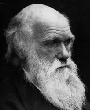
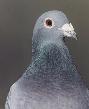
Gazing lazily out of my window, I thought I saw a pouter. Alas, by the time I had found my binoculars, it had gone. In all likelihood it was yet one more C. livia vulgaris. Just like the time I thought I had discovered the original ms of Coriolanus , I suspect that what, on this occasion, seemed superficially plausible was, once again, not really good and sound. It is a common problem and after all, the ability to leap to conclusions on insufficient evidence, is an evolutionary advantage. As the starving ass, stuck betwixt two bushels of hay, eventually found out, making no choice is no choice at all. It often behoves us to do something, rather than nothing. A philosophy by which I sometimes justify the more unfashionable of my actions. We choose. Our capacity to draw conclusions based on the scarest of information is universal. (See? I'm doing it now.) But what are you going to do? You can never hope to know everything. But thankfully you don't need to, just believe what you are told. There are more things in Heaven and Earth than are dreamt of in your philosophy and what is more there lots of people who are striving to keep it that way. Jump to conclusions, take the infamous leap of faith. Whatever you do, do not follow the example of that convicted subversive Socrates and admit to ignorance. Question anything and soon you have to question everything. To paraphrase HAL's dad, any suffiently complicated idea can be 'explained' as magic, just ask Alfred Russell Wallace, that was his solution to the thorny problem of Us, a topic on which the normally forthright Charles Robert Darwin was wisely silent if asked to venture beyond the available evidence. (Though he posited more than he let on.) Nature is clearly as at least as skilled as Sir John Sebright, so even if looks like a duck and walks like a duck and even quacks like a duck, beware, it may be a pigeon.
Wednesday, 23rd February 2000 |
